Every December, parcels of fine food and seasonal delicacies start arriving at homes and offices all over Japan. These are oseibo (お歳暮) — year-end gifts sent to say “thank you for everything this year.” If you live or work in Japan, have Japanese in-laws, or study under a Japanese teacher, sooner or later one will arrive at your door — or you may want to send one yourself.
And then the question comes: Do I need to write a letter? What should it say? How soon?
The good news is that Japanese year-end letters follow a clear pattern. Once you know the pattern, all you need to add is a line or two in your own words. In this guide we explain what oseibo is, how the thank-you letter (お礼状, orei-jō) and the cover letter sent with a gift (送り状, okuri-jō) work, and share 12 sample letters in Japanese with English translations — for business partners, superiors, in-laws, friends, short notes on ippitsusen notepaper, and even email. Simply copy the Japanese and replace the ○○ parts.
What Is Oseibo? Japan’s Year-End Gift in a Nutshell
Oseibo literally means “the end of the year.” It is a gift sent to people who have looked after you during the year — clients and business partners, your boss, a teacher, a doctor, parents and in-laws, relatives who live far away. Its summer counterpart is ochūgen (お中元), sent in July or August.
- When: generally from early December to around December 20th. In recent years many people start in late November.
- What: usually something consumable — regional specialties, seafood, fruit, sweets, coffee, beer or sake. Most are shipped directly from a department store or online shop.
- Is a return gift expected? No. Oseibo is itself a “thank you,” so a written thank-you letter is the proper response (see the FAQ below).
Because the gift usually arrives by delivery — sometimes with no note at all — letters play an important role on both sides. The sender’s cover letter tells the recipient what is coming and why. The recipient’s thank-you letter confirms that the parcel arrived safely and that it was appreciated. In Japan, staying silent after receiving a gift can leave the sender wondering whether it ever arrived, which is why a prompt letter matters so much.
Thank-You Letter vs. Cover Letter: What’s the Difference?
The two letters are mirror images: different writers, different timing.
| Thank-you letter (お礼状) | Cover letter (送り状) | |
|---|---|---|
| Who writes it | The person who received the oseibo | The person sending the oseibo |
| When | Within about 3 days of receiving the gift | So that it arrives before (or with) the gift |
| Purpose | To thank them and let them know it arrived safely | To announce the gift and when it will arrive |
| Usual format | Letter paper in an envelope, or a postcard (an ippitsusen note for close friends) | Letter or postcard, or an ippitsusen note tucked in with the gift |
An easy way to remember: the sender writes the cover letter, the recipient writes the thank-you letter. Neither is a strict obligation, but a handwritten letter changes how the gift is remembered.
Writing an Oseibo Thank-You Letter: The Basics
How Soon Should You Send It? Within 3 Days
Aim to send your thank-you letter within three days of receiving the gift. Since the letter also tells the sender that the parcel arrived, the sooner the better.
If you are late, sending it anyway is far better than not sending one at all. Simply add a line such as 「御礼が遅くなり失礼いたしました」(“Please forgive me for my late thanks”). With close family or friends, you can first call or message to say it arrived, then follow up with a letter — that is considered especially polite.
The Four-Part Structure of a Japanese Letter
Formal Japanese letters are built in four blocks. Follow this order and your letter will have the right shape.
- Opening (前文): an opening word such as haikei (拝啓) → a seasonal greeting → a few words hoping the reader is well
- Main body (主文): thanks for the oseibo → your impression of the gift (be specific — e.g. “we enjoyed it together as a family”) → thanks for the past year
- Closing (末文): wishes for their health and good relations in the new year → a closing word such as keigu (敬具)
- Date and names (後付け): date, your name and the recipient’s name (include these for business letters and superiors)
The most important part is your impression of the gift. Rather than only “we gratefully received it,” add a line about what happened afterwards — “we all sat around the table and enjoyed it,” or “I was so touched that you remembered my favorite.” Even a standard letter feels warm with that one personal touch.
December Seasonal Greetings and Opening/Closing Words
Japanese letters traditionally open with a short phrase about the season. Here are greetings commonly used in December. Formal “kango” phrases suit business and superiors; softer conversational phrases suit people you are closer to.
- Formal: 師走の候 (shiwasu no kō, “in this busy month of December”), 歳末の候 (“at the close of the year”), 初冬の候 (“in early winter” — early December), 寒冷の候 (“in this cold season”)
- Softer: 「師走に入り、何かと気ぜわしい日々が続いております」 (“December has arrived, and the days are busy”), 「今年も残すところわずかとなりました」 (“Only a few days of the year remain” — late December)
The standard pair of opening and closing words is 拝啓 (haikei) … 敬具 (keigu), roughly “Dear … Sincerely.” For very formal letters, use 謹啓 (kinkei) … 謹白 (kinpaku). Women may close with かしこ (kashiko) instead of keigu. On a postcard or short note to someone close, you can leave the opening and closing words out.
Letter, Postcard or Ippitsusen?
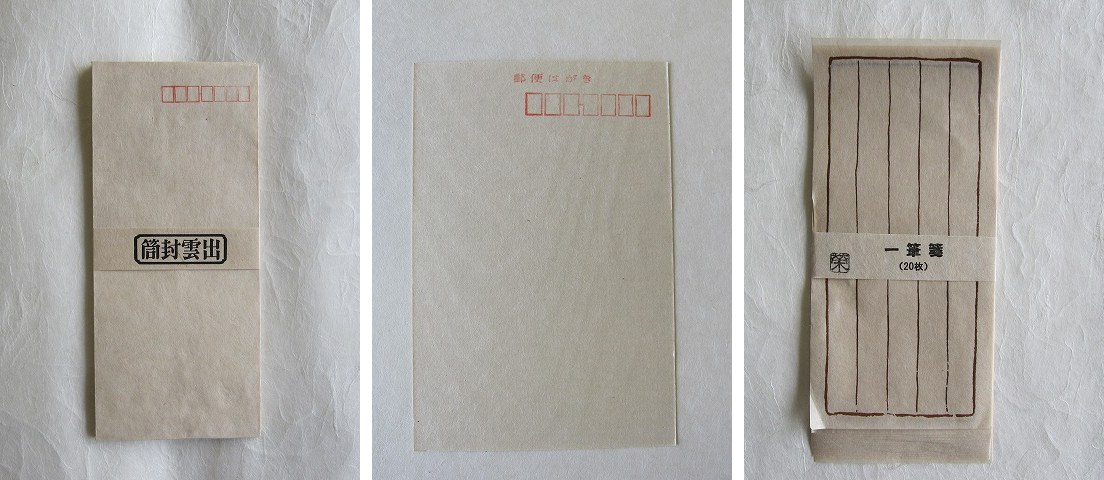
For superiors and business partners, the most polite choice is a letter on writing paper, sent in an envelope. Plain white or pale-colored paper is best, and writing vertically is considered the formal style. A postcard is perfectly fine for relatives and friends. An ippitsusen (一筆箋) — a narrow notepaper for a few lines — suits short thanks to people you are close to, and makes an ideal note to tuck in with a gift (samples later in this article).
Oseibo Thank-You Letter Samples: 5 Letters for Different Recipients
Below are thank-you letters you can copy as they are. Write the Japanese text in your letter, replacing the ○○ parts with the name of the gift or your own words. The English translations are there to help you understand what each line says.
Sample 1: To a Business Partner
For an oseibo delivered to your company. As the letter comes from the company, sign it with the representative’s name or the department name.
拝啓 師走の候、貴社ますますご隆盛のこととお慶び申し上げます。平素は格別のお引き立てを賜り、厚く御礼申し上げます。
さて、このたびは結構なお歳暮の品をお贈りいただき、誠にありがとうございました。社員一同、ありがたく頂戴いたしました。
本年も大変お世話になりました。来年も変わらぬご愛顧のほど、よろしくお願い申し上げます。
まずは略儀ながら、書中をもちまして御礼申し上げます。
敬具
令和○年十二月○日
株式会社○○ 代表取締役 ○○○○
株式会社△△ 代表取締役 △△△△様
In English: Dear Sir or Madam, In this busy month of December, we are delighted to hear of your company’s continued prosperity, and thank you for your constant patronage. We sincerely thank you for the splendid year-end gift you kindly sent us. All of our staff received it with gratitude. Thank you for all your support this year; we look forward to your continued favor in the coming year. Please accept this letter as our brief expression of thanks. Sincerely, [date], [your company, title, name] to [their company, title, name].
Sample 2: To a Junior Colleague or Former Student
Oseibo is usually given to someone senior, so you may be the one receiving it from a subordinate or student. A letter from senior to junior can be relaxed, and words recognizing their hard work this year are always appreciated.
拝啓 師走を迎え、寒さもひとしお身にしみる頃となりました。お元気でお過ごしのことと思います。
このたびはご丁寧にお歳暮をお贈りくださり、ありがとうございました。私の好物の○○を覚えていてくれたことが何よりうれしく、家族でおいしくいただきました。
今年は○○でのがんばりがじつに頼もしく、私もずいぶん助けられました。
寒さ厳しき折、体調をくずさぬよう気をつけて、どうぞよい年をお迎えください。
敬具
In English: December is here and the cold is really setting in. I hope you are keeping well. Thank you so much for your thoughtful year-end gift. I was especially happy that you remembered ○○ is my favorite, and my family and I enjoyed it very much. Your hard work on ○○ this year was truly reassuring, and it helped me a great deal. Please take care of yourself in the cold, and have a wonderful new year. Sincerely.
Sample 3: To Your Parents-in-Law
For a gift of regional specialties from your spouse’s parents. Mentioning how the grandchildren enjoyed it will make them very happy.
拝啓 師走に入り、朝晩の冷え込みが厳しくなってまいりました。お義父様、お義母様にはお変わりなくお過ごしでしょうか。
このたびは、おいしい○○をたくさんお送りいただき、ありがとうございました。子どもたちも大喜びで、さっそく夕食でいただきました。いつもお心にかけていただき、本当に感謝しております。
年末年始には、家族そろってごあいさつにうかがう予定です。寒さがいっそう厳しくなりますので、どうぞお体を大切になさってください。
敬具
In English: Now that December is here, the mornings and evenings have turned quite cold. I hope you are both well. Thank you so much for sending us so much delicious ○○. The children were thrilled, and we had it for dinner right away. We are truly grateful that you always think of us. We are planning to visit as a family over the New Year holidays. As it will only get colder, please take good care of yourselves. Sincerely.
Sample 4: To Relatives or Friends (Casual)
For people you are close to, you can skip the opening word and seasonal greeting and write as if you were talking to them. A postcard or ippitsusen is perfectly fine.
師走に入り、なにかと慌ただしい毎日ですね。お元気ですか。
先日は、おいしい○○を送ってくれてありがとう。届いたその日に家族で食べて、みんなで「やっぱりこれだね」と話していました。
今年もいろいろお世話になりました。来年もどうぞよろしくね。寒くなるので、風邪などひかないように気をつけてください。
In English: December is here and every day is so busy! How are you? Thank you for the delicious ○○ you sent the other day. We ate it as a family the very day it arrived, and everyone agreed, “This is the best.” Thanks for everything this year, and I hope we’ll keep in touch next year too. It’s getting cold, so take care not to catch a cold.
Sample 5: Declining Future Oseibo Gifts Politely
If receiving a gift every year makes you uncomfortable, first thank them sincerely, then gently express your wish without causing offense.
拝啓 師走の候、皆様にはますますご健勝のこととお慶び申し上げます。
このたびは結構なお歳暮の品をお贈りいただき、誠にありがとうございました。いつもながらのお心遣いに、恐縮しております。
ただ、毎年このようなお気遣いをいただいては、かえって心苦しく存じます。どうか今後はお気遣いなさいませんよう、お願い申し上げます。これからも変わらぬお付き合いをいただけましたら、それが何よりの喜びです。
寒さ厳しき折、皆様どうぞご自愛ください。
敬具
In English: In this busy month of December, I am glad to know that you are all in good health. Thank you very much for the splendid year-end gift. I am humbled by your kindness, as always. However, receiving such thoughtfulness every year makes me feel rather apologetic, so I hope you will not trouble yourselves from now on. Your continued friendship is what makes me happiest. Please take good care of yourselves in this cold season. Sincerely.
If your employer’s rules do not allow you to accept gifts, the usual practice is to return the item unopened with a letter explaining the rule and thanking them for their kindness.
How to Write an Oseibo Cover Letter
What Is a Cover Letter? Send It Ahead of the Gift
A cover letter (送り状) is written by the sender to say, “I have sent you this gift, and it will arrive around this date.” When a gift is shipped straight from a department store or online shop, the cover letter keeps it from arriving out of the blue.
Formally, the cover letter should be mailed so that it arrives before the gift — or at the latest on the same day. If there isn’t time, or the recipient is close to you, it’s fine to enclose it with the gift instead.
Oseibo is normally sent between early December and around December 20th. If you miss the end of the year, send it during matsu-no-uchi (the New Year period, until January 7th — or 15th in some regions) labeled 「御年賀」 (on-nenga, a New Year’s gift); after that, label it 「寒中御見舞」 (kanchū omimai, a midwinter greeting).
What to Include in a Cover Letter
- A seasonal greeting and a few words hoping they are well
- Thanks for their kindness over the past year
- That you have sent an oseibo (what it is, and roughly when it will arrive)
- A humble closing such as 「ご笑納ください」 (goshōnō kudasai, “please accept this small token”) and good wishes for the coming year
Mentioning the item and the expected delivery date is considerate — it helps the recipient be home to receive it, and fresh or chilled items can be stored properly.
Oseibo Cover Letter Samples: 3 Letters for Different Recipients
Sample 6: To a Business Partner
拝啓 師走の候、貴社ますますご隆盛のこととお慶び申し上げます。平素は格別のご高配を賜り、厚く御礼申し上げます。
さて、本年一年のご厚情への感謝のしるしとして、心ばかりの品を別便にてお送りいたしました。○月○日ごろ到着の予定です。ご笑納いただければ幸いに存じます。
来年も変わらぬお引き立てのほど、よろしくお願い申し上げます。
まずは略儀ながら、書中にてごあいさつ申し上げます。
敬具
In English: Dear Sir or Madam, In this busy month of December, we are delighted to hear of your company’s continued prosperity, and thank you for your generous support. As a token of our gratitude for your kindness this year, we have sent you a small gift under separate cover, which should arrive around [date]. We hope you will kindly accept it. We look forward to your continued patronage in the coming year. Please accept this letter as our brief greeting. Sincerely.
Sample 7: To a Teacher or Boss
拝啓 師走に入り、寒さが一段と身にしみる頃となりました。○○先生にはお元気でお過ごしのことと拝察いたします。
本年も何かとご指導いただき、誠にありがとうございました。おかげさまで、○○も無事に○○することができました。
つきましては、日頃の感謝の気持ちを込めまして、私の郷里の名産の○○を別便にてお送りいたしました。お口に合えばうれしく存じます。
年末に向けてご多忙のことと存じますが、どうぞお体を大切に、よいお年をお迎えください。
敬具
In English: December has arrived and the cold grows sharper each day. I trust you are keeping well, ○○-sensei. Thank you so much for all your guidance this year. Thanks to you, I was able to [achievement]. As a token of my gratitude, I have sent you some ○○, a specialty of my hometown, under separate cover. I hope you will enjoy it. I know you will be busy toward the end of the year, but please take care of yourself and have a wonderful new year. Sincerely.
Sample 8: To Your Parents or Relatives
お父さん、お母さん、元気にしていますか。こちらはみんな元気にやっています。
今年もいろいろとありがとう。ささやかですが、お歳暮に○○を送りました。○日の午前中に届くように手配したので、受け取ってね。
寒くなるので、体に気をつけて。お正月に会えるのを楽しみにしています。
In English: Mom, Dad, how are you? We’re all doing well here. Thank you for everything this year. It’s just something small, but I’ve sent you some ○○ as an oseibo. It should arrive on the morning of the ○th, so please look out for it. It’s getting cold, so take care. I’m looking forward to seeing you at New Year.
3 Short Notes on Ippitsusen: Gift Notes and Quick Thanks
An ippitsusen (一筆箋) is a narrow notepaper, a little like a long strip, designed for just a few lines. It is perfect for a note slipped in with a gift or a quick thank-you to someone close. Skip the opening word and seasonal greeting, and keep it short and to the point.
Sample 9: A Note Enclosed With the Gift (Business or Superiors)
本年も大変お世話になりました。
感謝のしるしに、心ばかりの品をお届けいたします。
ご笑納いただければ幸いです。
来年もどうぞよろしくお願い申し上げます。
In English: Thank you for all your kindness this year. Please accept this small gift as a token of my gratitude. I look forward to working with you again next year.
Sample 10: A Note Enclosed With the Gift (Close Friends)
今年もありがとう。
地元で評判の○○を見つけたので送ります。
ご家族で召し上がってください。
よいお年を!
In English: Thanks for everything this year! I found some ○○ that’s popular around here, so I’m sending it to you. I hope your family enjoys it. Happy New Year!
Sample 11: A Short Thank-You on Ippitsusen
お心のこもったお歳暮をありがとうございました。
さっそく家族でおいしくいただいています。
寒さ厳しき折、どうぞご自愛ください。
In English: Thank you for your thoughtful year-end gift. My family is already enjoying it. Please take care of yourself in this cold season.
A thank-you on ippitsusen is best for people you know well. For superiors and business partners, a full letter in an envelope, like Samples 1–5, is the safer choice.
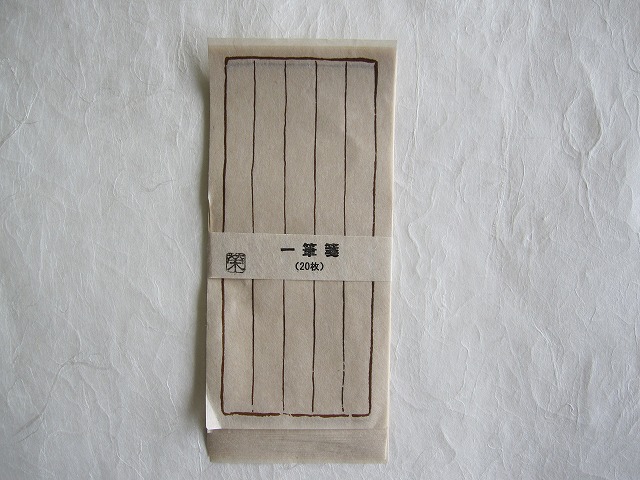
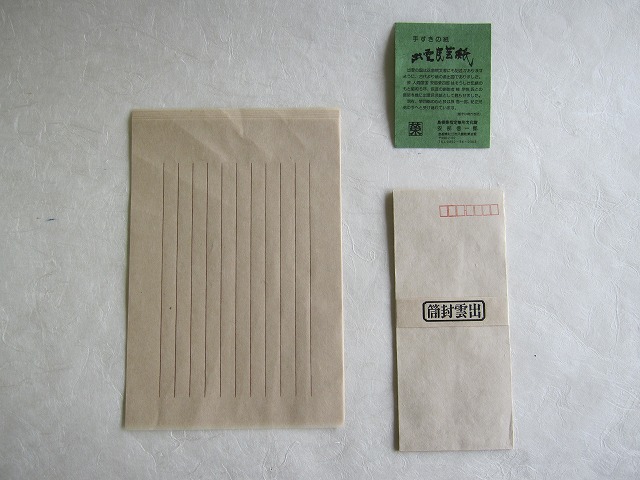
Washinkobo’s ippitsusen is made from Izumo washi with vertical ruled lines (18 × 8 cm, 20 sheets). Slip a single sheet in with your gift, and an ordinary cover note becomes a heartfelt greeting. We also ship overseas.
Oseibo Letters: Frequently Asked Questions
Do I need to send a return gift?
No. Oseibo is itself a gift of thanks, so a return gift is not expected — a thank-you letter is enough. If you would still like to send something back, choose an item worth about half to the same value of what you received, and label it 「御歳暮」 (oseibo) if it is still the year’s end, or 「御年賀」 / 「寒中御見舞」 after the New Year.
Is an email or phone call enough?
For people you are close to, a call or message conveys your thanks just fine. For superiors and business partners, a handwritten letter is more polite. If you want to respond quickly, let them know by phone or email that the gift has arrived, then follow up with a letter.
Here is a sample thank-you email (Sample 12). Put the purpose in the subject line so it isn’t overlooked.
件名:お歳暮の御礼
○○株式会社 ○○部 ○○様
いつも大変お世話になっております。△△株式会社の△△でございます。
本日、結構なお歳暮の品を拝受いたしました。いつもながらのお心遣いに、心より御礼申し上げます。部署の皆で、ありがたく頂戴いたします。
本年も格別のお引き立てをいただき、誠にありがとうございました。来年も変わらぬお付き合いのほど、よろしくお願い申し上げます。
まずはメールにて、取り急ぎ御礼申し上げます。
In English: Subject: Thank you for your year-end gift. To [name], [department], [company]. Thank you as always for your support. This is [name] of [company]. We received your splendid year-end gift today. We are sincerely grateful for your continued kindness, and everyone in our department will enjoy it. Thank you very much for your exceptional support this year, and we look forward to working with you in the coming year. Please accept this quick email of thanks for now.
A gift arrived addressed to my husband. How do I write the thank-you letter?
In Japan, it is customary to sign with your husband’s name and add the small character 「内」 (uchi, meaning “written by his wife”) just below and to the left of it. Adding the line 「主人に代わりまして御礼申し上げます」 (“I am writing to thank you on my husband’s behalf”) makes it even more polite.
Can I send or acknowledge oseibo while in mourning?
Yes. Oseibo is not a celebration, so it is fine to send one or write a thank-you letter even if you or the recipient are in mourning. However, avoid the red-and-white mizuhiki cord and use plain white paper or a plain label instead, and leave out celebratory words such as “congratulations” in your letter. If the 49 days after the death have not yet passed, it is better to wait and send it after the New Year as a 「寒中御見舞」 (midwinter greeting).
Izumo Washi Writing Paper for Your Thank-You Letters
An oseibo thank-you letter is the last letter of the year. That’s exactly why a little care with the paper — not just the words — makes it memorable for the person who receives it.
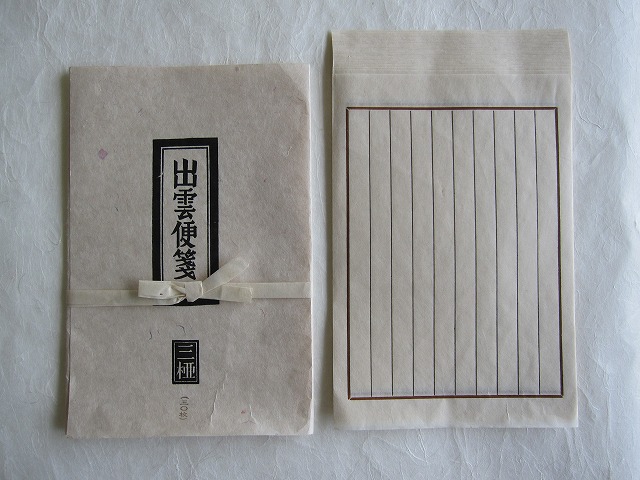
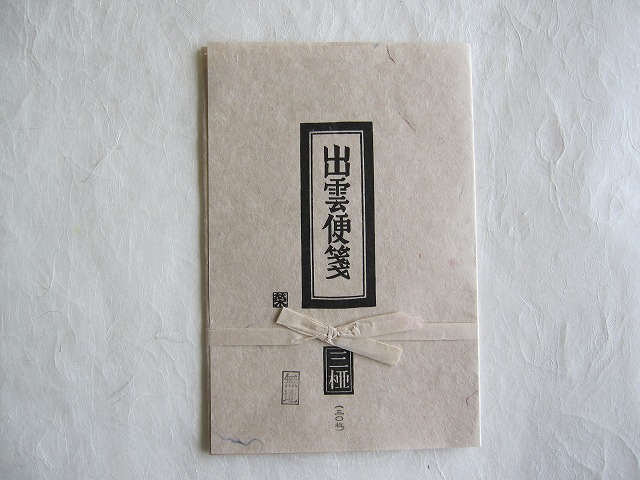
Washi feels soft in the hand, and a pen or brush glides across it in a way Western paper doesn’t. Washinkobo’s writing paper is Izumo washi, made in Shimane Prefecture. Choose from ruled or plain sheets made of mitsumata, or gampi paper that resists feathering even with a fountain pen — whichever suits your recipient and your writing tool.
You Might Also Enjoy
- Writing a Thank-You Letter to Your Teacher: The Right Paper Makes Your Feelings Count
- 6 Uses of Ganpi Paper: Calligraphy, Printmaking, Goshuin Books and More
- Izumo Washi Roll Paper (Makigami) for Greetings and Gifts
This year, try a letter that follows the pattern, plus one line in your own words. Your usual year-end exchange may become something a little more special.