In Japan, the first tea gathering of the new year is a special occasion. Your tea teacher invites the whole class, the room is decorated for the New Year, and everyone arrives in their best kimono. Then, a few weeks before, your teacher says: “Would you be the shōkyaku — the main guest — at this year’s hatsugama?”
If you study chadō (the Way of Tea) in Japan or with a Japanese teacher abroad, this moment can be both an honor and a little nerve-racking. The main guest speaks for all the guests. What do I say first? How do I ask about the scroll? What if I forget the words?
This guide explains what the main guest does at a hatsugama (初釜), and gives the Japanese greetings for each moment — from entering the tearoom to leaving — with romanization and English meanings. We also cover how to reply to a hatsugama invitation, with three sample letters in Japanese and English.
Please note that tea ceremony etiquette differs between schools (such as Omotesenke and Urasenke) and between individual classes. What follows is a general flow with common phrases. Always check with your teacher or senior students and follow the way your class does things.
What Is Hatsugama, and What Does the Main Guest Do?
Hatsugama literally means “first kettle.” It is the first tea gathering of the year, when the host hangs the kettle over the fire for the first time in the new year. Usually the teacher invites the students of their class — called a shachū (社中) — to celebrate the start of the year together. It is typically held in early to mid-January.
The format varies. Some classes hold a simple gathering in the practice room with sweets and tea. Others hold a full chaji (茶事) — a formal tea gathering lasting several hours with a kaiseki meal, thick tea (koicha) and thin tea (usucha).
The Shōkyaku Speaks for All the Guests
In a tea gathering, guests sit in a fixed order. The guest in the seat of honor is the shōkyaku (正客), the main guest. Next comes the jikyaku (次客, second guest), then the third guest, and so on. The last guest is called the tsume (詰) or otsume, who has their own role of helping behind the scenes.
The main guest has three main roles:
- To give New Year greetings and thanks to the host (your teacher) on behalf of all the guests
- To ask the host about the hanging scroll, flowers, utensils and sweets — a short exchange called mondō (問答, “questions and answers”)
- To lead the other guests and keep the gathering moving at a good pace
The other guests follow the main guest’s lead, so you are also something of a “master of ceremonies.” Even so, nobody expects perfection. If this is your first time as main guest, your teacher knows that and will help you along.
Things to Ask Your Teacher Beforehand
- The format of the day: a simple gathering in the practice room, or a formal chaji with kaiseki and koicha?
- Any set greetings your class uses, and when the question-and-answer exchanges take place
- Whether a gift of money or a participation fee is expected, and how the envelope should be labeled (this follows your class’s custom)
- How to handle zenrei, the courtesy greeting the day before (a visit, a phone call or a letter — see below)
Asking your teacher questions is not rude. If anything, it shows that you are taking the role seriously and preparing for it.
The Flow of Hatsugama and When the Main Guest Speaks
A formal hatsugama with a meal and koicha generally follows the order below. A simpler gathering in the practice room often skips some of these steps.
| Stage | What the main guest does |
|---|---|
| Waiting room (yoritsuki / machiai) | Greets the other guests and is served a cup of hot water |
| Entering the tearoom (seki-iri) | Enters first, views the alcove and the kettle, and takes the seat of honor |
| Greeting the host | After everyone bows together, gives New Year greetings and thanks for the invitation |
| First charcoal (shozumi) | Watches the charcoal being laid and asks to view the incense container |
| Meal (kaiseki) | Enjoys the food and sake (some classes skip this) |
| Break (nakadachi) | Leaves the room while the host prepares it for tea |
| Thick tea (koicha) | Eats the sweet, drinks the thick tea, and asks about the tea’s name and maker |
| Thin tea (usucha) | Drinks the thin tea, invites the host to finish, and asks to view the utensils |
| Leaving | Thanks the host for the day and leaves |
For every greeting and question, the rule is the same: keep it short and say it sincerely. Let’s look at the words for each moment.
The Main Guest’s Greetings: Japanese Phrases for Each Moment
Here are phrases that are commonly used. Replace ○○ with the details of your own day. Each phrase is followed by its romanization and an English meaning to help you understand what you are saying — on the day, of course, you will speak in Japanese.
In the Waiting Room: Greeting the Other Guests
Once all the guests have arrived, a brief word from the main guest to the others helps everything go smoothly afterward.
本日、正客をつとめさせていただきます○○でございます。
不慣れではございますが、どうぞよろしくお願いいたします。
Honjitsu, shōkyaku o tsutomesasete itadakimasu ○○ de gozaimasu. Funare de wa gozaimasu ga, dōzo yoroshiku onegai itashimasu.
“I am ○○, and I will be serving as the main guest today. I am not very experienced, but I ask for your kind support.”
After the Group Bow: New Year Greetings to the Host
When everyone has entered and taken their seats, the host appears at the host’s entrance and all the guests bow together with the host (sōrei, 総礼). In some classes, the main guest invites the host in. Once the host has entered, the main guest places their folding fan on the tatami in front of their knees and offers New Year greetings. This is the main guest’s most important greeting.
It should include three things: New Year wishes, thanks for the past year, and thanks for the invitation to hatsugama.
新年あけましておめでとうございます。
旧年中はたいへんお世話になりました。
本日はおめでたい初釜のお席にお招きいただき、誠にありがとうございます。
本年もどうぞよろしくお願い申し上げます。
Shinnen akemashite omedetō gozaimasu. Kyūnenchū wa taihen osewa ni narimashita. Honjitsu wa omedetai hatsugama no oseki ni omaneki itadaki, makoto ni arigatō gozaimasu. Honnen mo dōzo yoroshiku onegai mōshiagemasu.
“Happy New Year. Thank you very much for all your kindness last year. Thank you sincerely for inviting us to this joyful first tea gathering of the year. We look forward to your continued guidance this year.”
After the main guest’s greeting, classes differ: the other guests may greet the host in turn, or everyone may say “Omedetō gozaimasu” together. Keep your greeting brief — think of it as responding to the host’s words rather than giving a speech.
Asking About the Hanging Scroll and Flowers
The hanging scroll (kakemono) and flowers in the alcove (tokonoma) were chosen by the host especially for this day. The main guest asks about them on behalf of everyone.
本席のお掛物は、どなたのお筆でございますか。
(読み方をたずねるとき)どうぞお読み上げくださいませ。
お見事なお花でございますね。お花入れは。
Honseki no okakemono wa, donata no ofude de gozaimasu ka. — “Whose calligraphy is the scroll in today’s room?”
(To ask how it reads) Dōzo oyomiage kudasaimase. — “Would you kindly read it for us?”
Omigoto na ohana de gozaimasu ne. Ohanaire wa. — “What beautiful flowers. And the vase?”
At hatsugama, the scroll often carries words related to the New Year. Once the host has read it aloud, adding a short comment such as “Omedetai okotoba de gozaimasu ne” (“What auspicious words”) keeps the conversation flowing.
When Receiving Sweets and Tea
When the sweets are offered, say a word to the next guest before you take yours. After drinking the thick tea, the host may ask how the tea is (fukukagen, how well it has been kneaded). Answer briefly.
(お菓子をすすめられて、連客に)ではご一緒に。
(服加減をたずねられて)大変結構でございます。
(When offered sweets, to the other guests) Dewa goissho ni. — “Then, let us have them together.”
(When asked about the tea) Taihen kekkō de gozaimasu. — “It is excellent.”
Questions After the Thick Tea: Tea Name, Tea Merchant and Sweets
After the thick tea, the main guest asks the host about the tea and the sweets. The timing of this exchange differs between schools and classes.
お茶銘は。
お詰めは(どちらでございますか)。
お菓子のご銘は。
ご製は(どちらでございますか)。
Ochamei wa. — “What is the name of the tea?”
Otsume wa (dochira de gozaimasu ka). — “Which tea merchant packed it?”
Okashi no gomei wa. — “What is the name of the sweet?”
Gosei wa (dochira de gozaimasu ka). — “Which confectioner made it?”
In matcha, the powdered tea is given a poetic name, and both the tea and the seasonal sweet are chosen with care. Otsume refers to the tea merchant who packed the tea, and gosei to the confectioner. After hearing each answer, say “Arigatō gozaimasu.”
Viewing the Utensils, and the End of Thin Tea
As the host’s preparation draws to an end, the main guest asks to view the utensils. During thin tea, it is also the main guest’s role to check that every guest has had enough, and then to invite the host to finish (oshimai).
(濃茶)お茶入れ、お茶杓、お仕覆の拝見を。
(薄茶)どうぞお仕舞いくださいませ。
(薄茶)お薄器、お茶杓の拝見を。
(Thick tea) Ochaire, ochashaku, oshifuku no haiken o. — “May we view the tea caddy, the tea scoop and the caddy’s silk pouch?”
(Thin tea) Dōzo oshimai kudasaimase. — “Please, you may finish.”
(Thin tea) Ousuki, ochashaku no haiken o. — “May we view the tea container and the tea scoop?”
When Leaving
Finally, thank the host for the day.
本日は、新しい年にふさわしいおめでたいお席にお招きいただき、誠にありがとうございました。
本年もどうぞよろしくお願い申し上げます。
Honjitsu wa, atarashii toshi ni fusawashii omedetai oseki ni omaneki itadaki, makoto ni arigatō gozaimashita. Honnen mo dōzo yoroshiku onegai mōshiagemasu.
“Thank you sincerely for inviting us to such a joyful gathering, so fitting for the new year. We look forward to your continued guidance this year.”
Tips for the Main Guest’s Greetings
How Long Can You Say “Happy New Year”?
Hatsugama is usually held in early to mid-January, though some classes hold it in late January. There is no strict rule about how long New Year greetings can be used. One common view is to stop after matsu no uchi — the New Year period that ends on January 7th (or the 15th in some regions). If you are unsure, ask a senior student. A safe alternative is “Honnen mo dōzo yoroshiku onegai mōshiagemasu” (“We look forward to your continued guidance this year”).
Follow Your Teacher’s School and Class
Movements and phrases differ in small ways between the schools of tea, such as Omotesenke, Urasenke and Mushanokōjisenke. Even the main sweet of hatsugama varies; in Urasenke, hanabira-mochi (a soft rice cake folded around sweet white miso paste and a strip of candied burdock) is well known. Treat the phrases in this article as general examples, and give priority to the way your teacher and class do things.
It’s All Right If You Forget the Words
If the words don’t come to you on your first time as main guest, there is no need to panic. Your teacher, the host, knows perfectly well that a student is serving as main guest. Showing that you are happy to be invited matters far more than perfect phrasing.
How to Reply to a Hatsugama Invitation
Invitations to hatsugama often arrive by letter before the end of December. Your reply is not only a courtesy — it is an important message that lets the host decide the number of guests and prepare.
Reply as Soon as Possible
Send your reply as soon as you can after receiving the invitation — ideally within two or three days, and within a week at the latest. Until everyone has replied, the host cannot plan the meal, the sweets or the utensils.
A Letter Deserves a Letter
- If the invitation came as a sealed letter, it is polite to reply with a sealed letter as well (a postcard is considered less formal).
- If a reply postcard is enclosed, or for a large tea gathering, simply follow the instructions and use the postcard.
- Use plain white writing paper, or for a formal reply, makigami (巻紙) — a long roll of Japanese paper written vertically and cut to length. Write with a brush, a brush pen or a fountain pen.
- If you were invited in person at the practice room, or by email or a messaging app, it is fine to reply the same way.
The Basic Structure of a Reply
Formal Japanese letters follow a set pattern:
- An opening word for replies (haifuku, 拝復) and a seasonal greeting
- Thanks for the invitation
- Your answer, with the date and time confirmed (“I will come on January ○ at ○ o’clock”)
- A closing wish for the recipient’s health, and a closing word (keigu, 敬具)
Writing the date and time also helps the host double-check the arrangements.
Sample Reply 1: Accepting the Invitation
拝復 師走の候、先生にはますますご清祥のこととお喜び申し上げます。
このたびは初釜のご案内をいただき、誠にありがとうございます。
一月○日○時、喜んで参上いたします。新しい年のはじめに先生のお席に寄せていただけますことを、今から楽しみにしております。
寒さ厳しき折、どうぞお体を大切になさってください。
まずは御礼かたがたお返事まで。
敬具
十二月○日
○○○○
○○先生
In English: In reply to your letter. In this month of December, I trust you are in good health. Thank you very much for your invitation to hatsugama. I will be delighted to attend on January ○ at ○ o’clock. I am already looking forward to joining you at your tea gathering at the start of the new year. Please take good care of yourself in this cold season. With thanks, and in reply. Respectfully, [date], [your name], to [teacher’s name]-sensei.
Sample Reply 2: Accepting the Role of Main Guest
拝復 師走に入り、寒さもひとしお身にしみる頃となりました。先生にはお変わりなくお過ごしのことと存じます。
このたびは初釜のご案内とともに、正客のお役目をお申しつけいただき、身に余ることと恐縮しております。
未熟者ではございますが、精一杯つとめさせていただきます。当日は一月○日○時に参上いたします。
お忙しい年の瀬かと存じますが、どうぞご自愛くださいませ。
敬具
In English: In reply to your letter. December has come, and the cold is felt more keenly each day. I hope you are keeping well. Thank you for your invitation to hatsugama, and for asking me to serve as the main guest. I am truly honored, more than I deserve. I still have much to learn, but I will do my very best. I will come on January ○ at ○ o’clock. I know the end of the year is a busy time; please take care of yourself. Respectfully.
Sample Reply 3: Declining the Invitation
Even when you cannot attend, begin by thanking the host for the invitation, then express your regret and apologize. You do not need to explain the reason in detail.
拝復 師走の候、先生にはお健やかにお過ごしのことと存じます。
このたびは初釜にお招きいただき、誠にありがとうございます。
せっかくのお心遣いをいただきながら、あいにく当日はやむを得ない用事のため、伺うことがかないません。誠に申し訳ございません。
皆さまにもどうぞよろしくお伝えくださいませ。
寒さ厳しき折、どうぞご自愛ください。
敬具
In English: In reply to your letter. In this month of December, I trust you are in good health. Thank you very much for inviting me to hatsugama. Despite your kind thought, I regret that I have an unavoidable commitment that day and will not be able to attend. I am truly sorry. Please give my best regards to everyone. Please take care of yourself in this cold season. Respectfully.
What About Zenrei, the Greeting the Day Before?
Zenrei (前礼) is a courtesy call to the host on the day before a tea gathering, to say “I look forward to coming tomorrow.” Traditionally it is a brief greeting at the host’s front door. Today, so as not to interrupt the host’s preparations, many people make it by phone or by letter instead. Check how your class handles it with your teacher or senior students.
It is considerate for the main guest to collect the other guests’ greetings and pass them on to the host together.
Don’t Forget the Thank-You Letter Afterward (Gorei)
After hatsugama, send a thank-you letter as soon as possible — ideally within three days. This is called gorei (後礼). For tips on writing to your teacher and choosing the paper, see this article:
For a Formal Reply, Write on Makigami
A reply to a hatsugama invitation, or a thank-you letter afterward, is a formal letter to your tea teacher. Ordinary writing paper is perfectly acceptable, but a reply written with a brush on makigami tells your teacher, before they read a single word, that you took the time to prepare properly.
Washinkobo’s Izumo Washi Makigami (Mitsumata, Plain) is made from 100% mitsumata fiber, handmade in Yakumo, Shimane Prefecture (18.8 cm wide × 10 m long). Its smooth surface lets a brush or brush pen glide easily — ideal for both your reply and your thank-you letter.
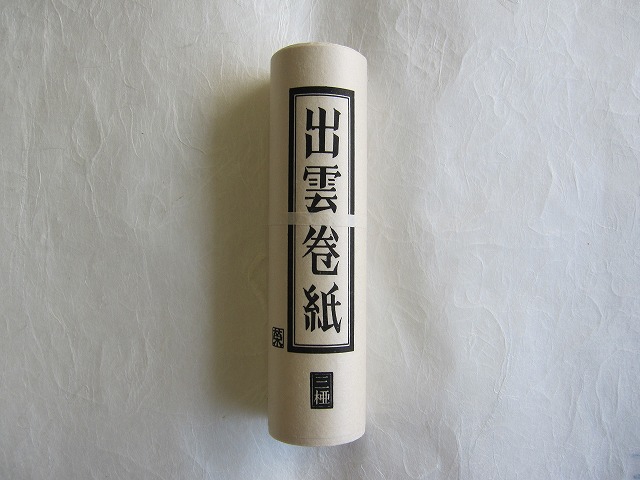
Colored makigami and kumogami (“cloud paper”) are also available. To learn more, see “Izumo Washi Roll Paper (Makigami) for Greetings and Gifts.” Ordering from outside Japan? See “How to Order from Outside Japan.”
Hatsugama Main Guest: Frequently Asked Questions
Who serves as the main guest?
Generally, it is a student with long experience in the class, or someone the host chooses. At hatsugama, a teacher may deliberately ask a newer student to be main guest so they can gain experience. If you are asked, accept gratefully and ask your teacher about anything you are unsure of.
Should I bring a gift of money?
If the hatsugama has a participation fee, a monetary gift is often unnecessary. If you do give one, prepare crisp new bills and write Go-nenga (御年賀, “New Year’s gift”) or a similar phrase on the envelope. The amount and the wording depend on your class’s custom, so quietly asking a senior student is the surest way.
What should I bring, such as kaishi paper and a fan?
Bring the same things you use in practice: kaishi paper, a sweet pick (kashikiri), a folding fan (sensu) and a silk cloth (fukusa). For more about kaishi, see “Seasonal Kaishi Paper for Tea Ceremony.”
Summary: The Main Guest’s Greeting Is “New Year Wishes, Thanks, and Thanks for the Invitation”
- In the New Year greeting to the host, include three things: New Year wishes, thanks for the past year, and thanks for the invitation.
- The main guest asks about the scroll, flowers, tea and sweets on behalf of all the guests (mondō).
- Phrases and timing differ between schools and classes, so follow your teacher’s way.
- Reply to a hatsugama invitation as soon as possible, by letter if you received one. For a formal reply, use makigami.
- After hatsugama, send a thank-you letter (gorei), ideally within three days.
Write your reply on handmade Izumo washi.
Makigami roll paper from Shimane, for hatsugama replies and thank-you letters.
See Izumo Washi MakigamiWe ship worldwide — How to Order from Outside Japan